Block Crush
New Game



Rating:
4.25
Played:
14,298
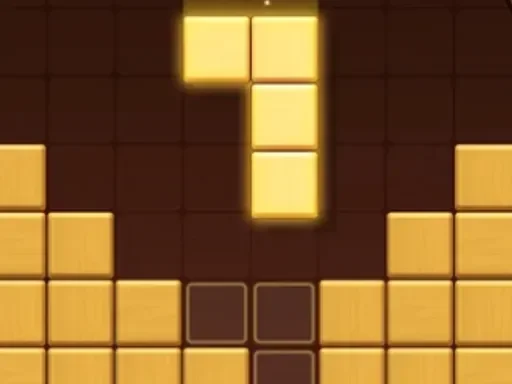
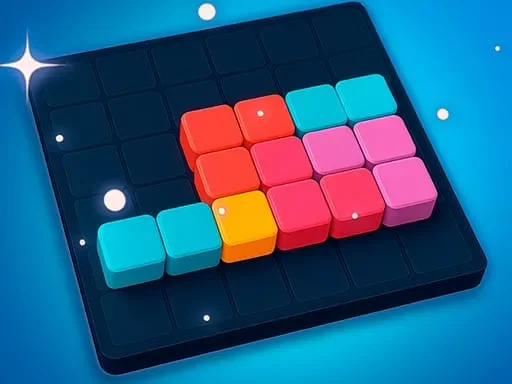
Block Crush is a browser logic puzzle where you place shaped blocks on a square grid, clear full rows or columns, and protect open space for future moves. It is easy to start, quick to restart, and strong as a light brain game because one careless placement can spoil several turns at once.
The game works because every move has two jobs at once. It should help you now, and it should keep the board flexible later. A placement that looks safe can still be weak if it traps the next large piece or breaks the board into small unusable pockets. That quiet pressure is why the puzzle stays interesting run after run.
What a Round Actually Feels Like
Each round gives you a few wooden pieces, and you place them one by one until none of the available shapes fit anymore. Early turns are open and forgiving. Midgame is where the puzzle sharpens, because long bars need clean lanes and square blocks need broad rooms. Late game often comes down to whether you preserved enough useful space in the center of the grid.
Most versions do not use a strict timer, so the pressure comes from planning. You are not racing the clock. You are trying to keep the board in a shape that can accept whatever the tray throws at you next. That makes it a thoughtful puzzle instead of a speed test, and it rewards calm, deliberate thinking.
Browser Session, No Setup
You can play Block Crush directly on playstickfight.com in a browser. Open the page, wait for the board to load, and start dragging pieces into place. No installation is needed, and restarts are instant, which makes the game easy to fit into short breaks or longer score-chasing sessions.
If you have seen Block Crush elsewhere, the core loop should feel familiar: place blocks, clear lines, and keep the grid alive. The browser version is especially convenient on desktop, laptop, tablet, or phone because the rules are simple and the interface is easy to read at a glance.
Board Rules and Inputs
Simple input
The controls are usually drag and drop. Pick a piece, move it onto a valid open area, and release. If the shape does not fit, the game rejects the move.
Clears open breathing room
Completing a full row or column removes that line from the grid. The best clears are the ones that also make the board smoother, not just emptier.
Shape matters more than emptiness
Many players lose because they leave tiny holes or narrow channels behind. A board can look open and still be close to failure if the remaining space is badly shaped.
Moves That Help You Last Longer
Keep the center of the board as useful as possible. It accepts more shapes than the edges, so filling it too early often limits future options. Corners and outer lanes are usually safer places for awkward pieces when the board is still roomy.
Avoid single-cell dents unless they immediately complete a clear. Small defects are expensive because they fragment the board and make future placements awkward. In this game, clean space is more valuable than flashy scoring.
Think about the current tray as a set, not as separate pieces. Sometimes the best move is the one that makes the next two placements easier. If you only solve the present turn, you can trap yourself a move later.
Where New Players Slip Up
The biggest mistake is chasing a clear that looks good but damages the board. Another common error is packing the grid symmetrically just because it looks tidy. Symmetry does not guarantee flexibility. You want space that can accept many shapes, not space that only looks organized.
Players also rush when the board starts to fill up. That is usually the wrong response. The later the game gets, the more important it is to pause and compare a few legal placements before committing.
How This Style Evolved
Block Crush belongs to the larger family of line-clearing block puzzles. The formula takes inspiration from older classics, but it removes the falling-piece pressure and lets you place shapes directly. That shift turns the game into a space-management puzzle. The challenge is not speed. It is keeping the board in a shape that still works after many turns.
The version embedded here uses a wood-block style presentation, which fits the slow, methodical gameplay well. The theme is familiar, readable, and easy to understand on first contact, which is part of why this style remains popular in browser games.
FAQ
Is Block Crush hard to learn?
No. The rules are simple, and the challenge comes from planning rather than memorizing complex mechanics.
Can I play Block Crush for free?
Yes. It runs in the browser, so you can start playing without downloading anything.
Why does the round end with empty cells still on the board?
The game ends when none of the current pieces can fit anywhere. Empty space alone is not enough if the shape of that space is wrong.
Is there a time limit?
Usually no strict timer is forcing you to rush, so you can slow down and choose carefully.
Which beginner tip matters most?
Keep the center open, avoid tiny holes, and place large awkward pieces before the board gets crowded.
Is this more strategy than speed?
Yes. It rewards planning, board control, and patience far more than rushing through placements.
Comments
Loading comments…